Techmark LED lighting: lumens, colour temperature, and lifetime
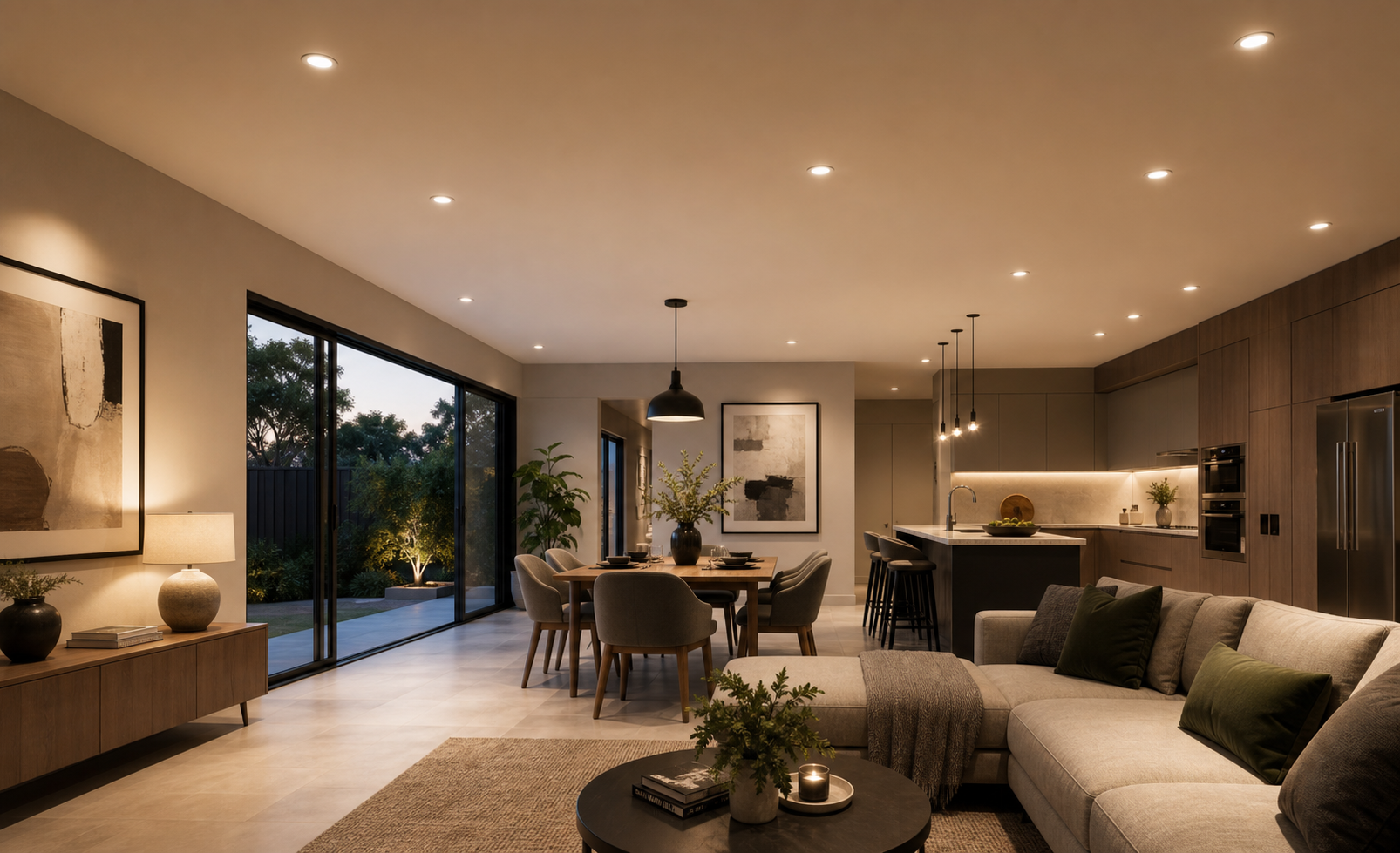
Compare LED lumens, colour temperature, dimmer compatibility, and maintained lifetime, with a practical checklist for a Techmark lighting quote.
Reviewed
Start with lumens, then compare watts
For most buyers, the first mistake is treating wattage as a brightness label. ENERGY STAR guidance keeps the order the other way around: choose the lumen level you need first, then compare how efficiently different products deliver it.
That matters because Techmark bulbs, downlights, and higher-output fixtures should be judged by useful light on the application, not by the lowest watt number on the carton alone. A lower-watt lamp is only the better choice if it still delivers the brightness the room or task needs.
- Use lumens to compare visible light output.
- Use watts and lumens-per-watt to compare energy efficiency after brightness is matched.
- Check whether the fitting is intended for ambient lighting, task lighting, or directional use before comparing two products directly.
Match colour temperature to the room and the task
Colour temperature changes how a space feels and how surfaces appear. ENERGY STAR downlight guidance describes lower Kelvin values around 2700K to 3000K as warmer-looking light, while 4000K and above create a cooler appearance.
For Techmark buyers, this is usually the quickest way to avoid disappointment after installation. Bedrooms, hospitality, and softer residential spaces often benefit from warmer light, while kitchens, work zones, utility spaces, and some commercial applications can justify a cooler, more neutral look.
- Warm white is typically the safer starting point for living rooms and bedrooms.
- Neutral to cool white is often more practical where visual clarity and task focus matter.
- Do not mix very different colour temperatures in adjoining spaces unless the application is intentional.
Do not ignore colour quality and optical control
Brightness alone does not guarantee good lighting. DOE LED guidance notes that colour fidelity should still be evaluated, and it describes CRI of about 80 as a practical interior baseline, with higher fidelity available when the application needs it.
That is especially relevant for retail display, kitchens, vanity use, and decorative interior work. Buyers comparing Techmark bulbs, panels, or downlights should also think about beam shape, glare, and whether the fitting is meant to spread light broadly or push it more directionally.
- Use colour quality as part of the shortlist when people, finishes, or merchandise need to look natural.
- Compare downlights by delivered light and distribution, not by wattage alone.
- Check dimmer or control compatibility before specifying dimmable LEDs.
Treat lifetime as maintained performance, not a forever claim
ENERGY STAR explains that LEDs usually age through lumen depreciation, where brightness falls gradually over time, rather than failing like a traditional filament lamp. That makes thermal design, component quality, and application fit more important than a headline lifetime claim in isolation.
For Techmark projects and repeat-use buyers, the stronger evaluation asks whether the product can keep useful output, acceptable colour, and dependable operation in the actual operating environment. Street lighting, emergency lighting, enclosed fixtures, and hotter conditions all deserve a more careful product-fit check.
- Review lifetime claims as maintained light output, not only calendar years.
- Hotter environments and enclosed fittings can put more pressure on LED drivers and thermal management.
- Choose the right fixture family for the installation instead of assuming one bulb style suits every application.
Prepare a lighting quote and sample checklist
ENERGY STAR downlight criteria call for known control incompatibilities to be disclosed. Ask for a compatibility list for the exact lamp, driver, and dimmer combination; a dimmable label alone does not establish that your existing control will work.
DOE distinguishes declining light output from electronics failure and colour shift. Ask what the stated lifetime measures and review the separate written warranty. A lumen-maintenance estimate is not a promise that every component will operate for that many hours.
- Send the room dimensions, mounting height, fixture count, and task or display requirements.
- Request lumens, input watts, CCT, CRI, beam distribution, and the exact model code on the quotation.
- Confirm fixture dimensions, supply requirements, ambient limits, and suitability for enclosed or damp locations from the model documentation.
- Evaluate a sample with the proposed control at low and full output; check visible flicker, noise, glare, and colour appearance.
- Confirm warranty duration, exclusions, replacement availability, and the service process in writing.
This checklist applies the cited lighting principles to a Techmark purchasing enquiry. U.S. DOE and ENERGY STAR references do not establish Techmark certification or local compliance. Confirm model specifications, installation requirements, and warranty terms for your India or UAE project.
Sources
- Learn About Brightness — ENERGY STAR
Confirms that brightness should be compared in lumens rather than watts when selecting replacement lamps.
- Learn About LED Lighting — ENERGY STAR
Explains LED efficiency and why useful life is based on lumen depreciation rather than a simple burn-out event.
- Downlights Key Product Criteria — ENERGY STAR
Provides practical references for downlight light output, lumens-per-watt, correlated colour temperature, and minimum colour-quality criteria.
- LED Basics — U.S. Department of Energy
DOE guidance on LED colour quality, including why CRI around 80 is a practical baseline for interior lighting and why higher fidelity can involve efficiency tradeoffs.